
Environment
Timeless
design
The timelessness of design is our environmental act
We launch new products with careful thought. We design and implement products to last for years, not just seasons. Woodnotes still has items from the first 1987 collection in production. This shows that the core of our business has a strong footing. New products and materials are created to complement the existing collection, so that old and new products can be used side by side. Based on customer orders, we manufacture textile products for direct use without long storage.
We take responsibility for the consumer: when choosing Woodnotes, the consumer also chooses a timeless and long-lasting product. We are committed to the UN Sustainable Development Goals. The 2030 Agenda for Sustainable Development aims at eradicating extreme poverty and promoting a sustainable development in which the environment, the economy and human beings are taken into account in equal measure.
Local
manufacturing
We manufacture locally and responsibly
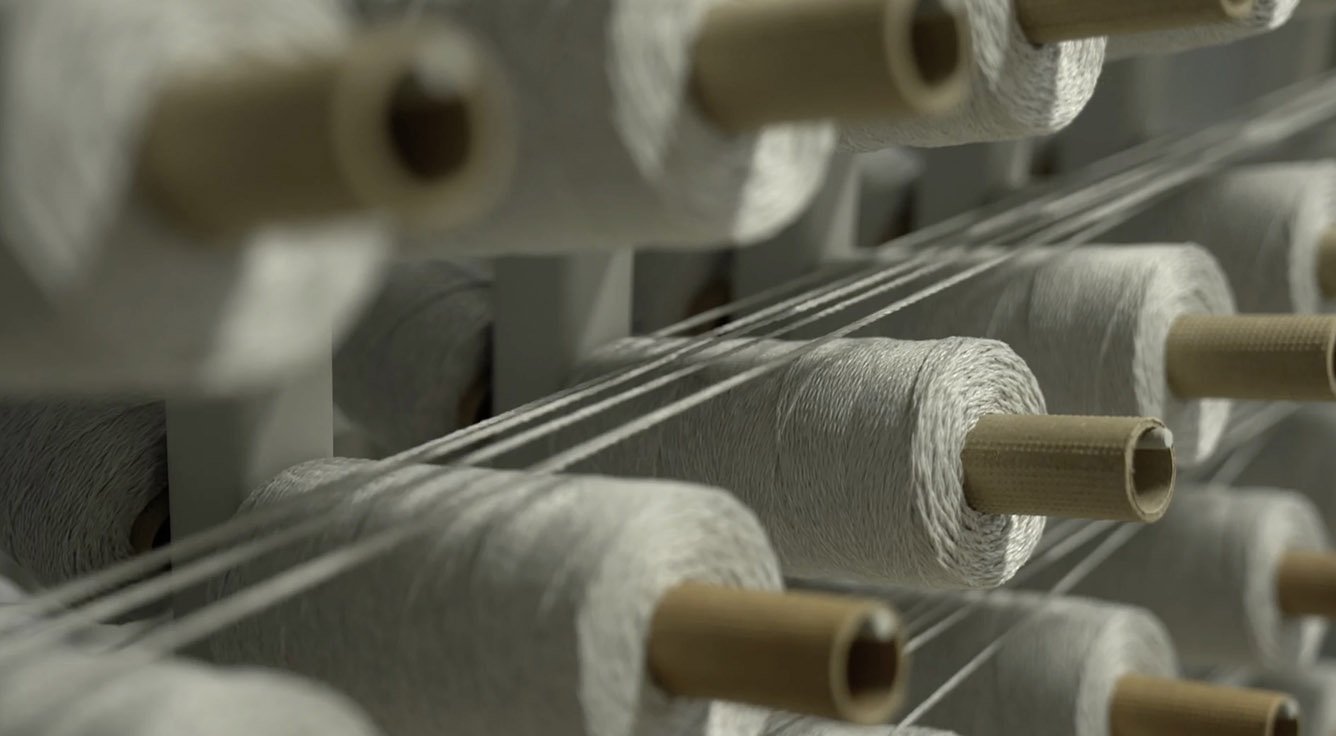
100% of our paper yarn textile products are manufactured in Finland. The production chain of key paper yarn textiles - from paper yarn spinning to textile weaving, sewing, finishing work and packaged product - takes place centrally at nearby production sites in Kauhajärvi and Lapua: the distance between the weaving mill and the sewing shop is 26 km. The environmental impact of transport is thus kept to a minimum.
In subcontracting, we primarily prefer European manufacturers if the production or material expertise we need cannot be found in Finland. Our hand-knotted woollen rugs are made in India due to the local expertise and tradition of this craftsmanship specialty, which cannot be found in Europe. Production in India is Sedex/SMETA (SGS) audited and the supplier is also a member of the Good Weave organization.
We ensure that our subcontractors are aware of their environmental responsibilities and that their manufacturing is responsible. For example, our Finnish supplier of steel parts for our furniture implements an environmental system in accordance with the SFS-EN ISO 14001 standard, which includes e.g. their own bioheat plant and process water treatment plant. Our Italian wooden furniture manufacturer also has an ISO 14001 environmental system in place.
Green
energy
Our factory runs on green energy
The textiles in our own production (paper yarn rugs, as well as fabrics for blinds, upholsteries and accessories) are woven and sewn with green energy; wind and hydropower. Our offices and showrooms are located in Helsinki on the shores of the windy Gulf of Finland at the Cable Factory and our electricity is naturally generated by wind power. Green energy is also used by our key foreign subcontractors. In Italy, for example, 80% of the energy needed by the factory producing Twiggy tables is generated by its own photovoltaic power plant.
Certified
raw material
Material based product design
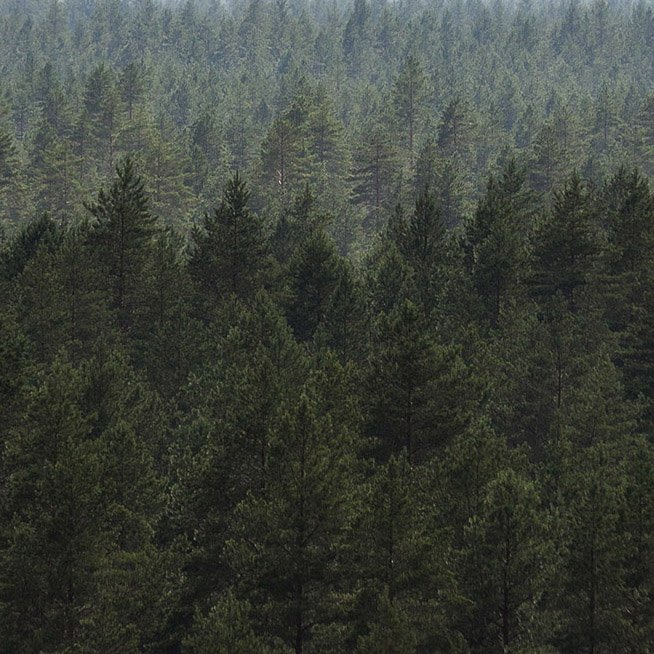
The core of our business has been material-based product design. The beauty of paper yarn has been both a source of inspiration and a basis for activities at Woodnotes.
Long-lasting paper yarn textile binds carbon as long as the product is in use or the material is in circulation. The strong raw material for the paper yarn comes from the sustainable northern coniferous forests and the paper production is certified. The paper is produced from wood pulp fiber without chlorine gases and the paper yarn is dyed with colors that do not contain organic halogen compounds or heavy metals.
Healthy & safe materials
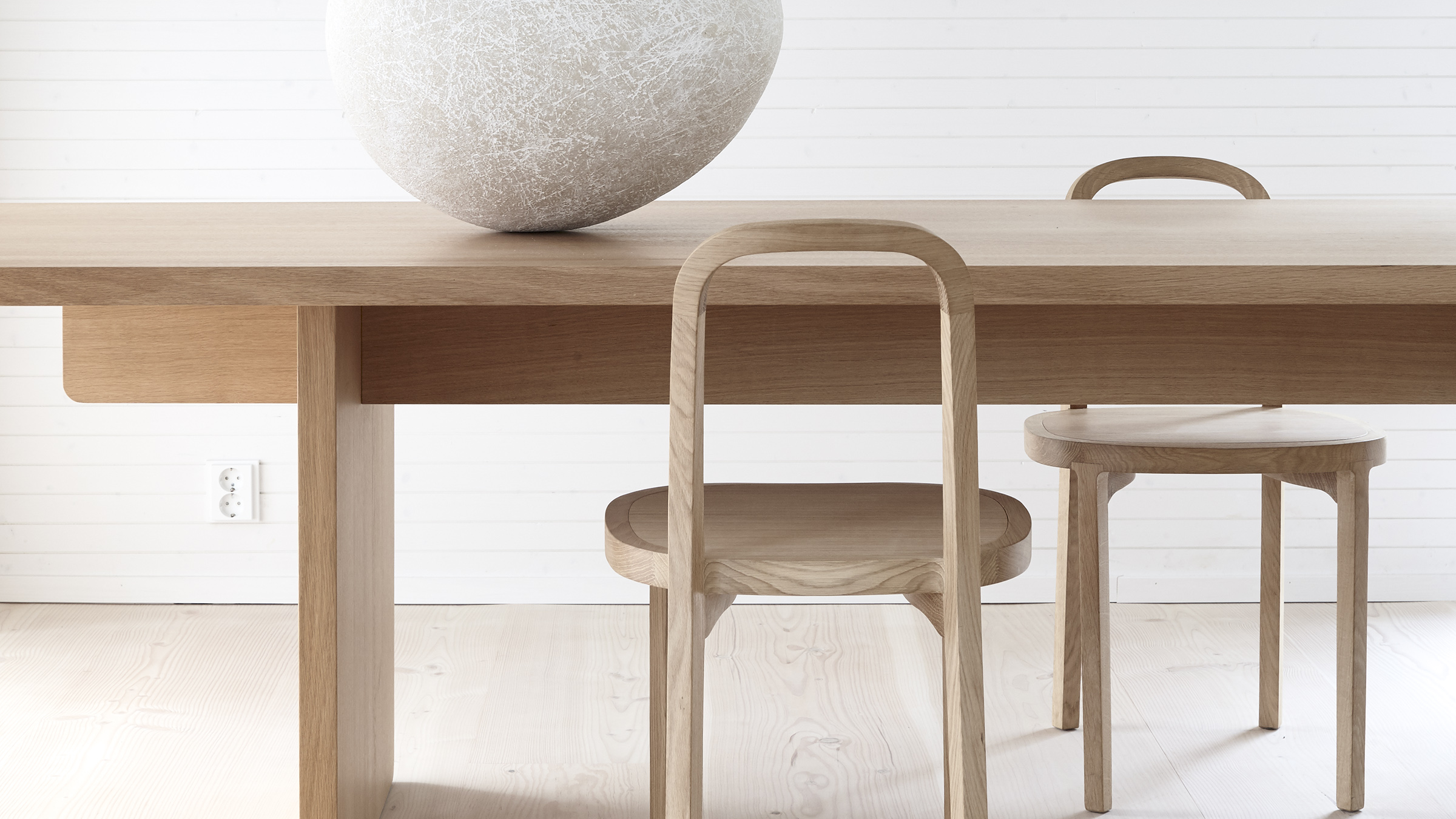
Wooden furniture, fabric dyes, recycled content & sustainability
For the wooden furniture we use certified European oak and ash. They bind carbon throughout their life cycle and proper maintenance will make the products almost eternal. The structure of Woodnotes’ metal-framed furniture is also very durable and wearing parts can be repaired and replaced.
The colours and dirt-repellents used in the dyeing and finishing of our fabrics meet the requirements of EU’s Reach chemicals regulation: they are environmentally friendly and do not endanger health.
The padding materials used in furniture and cushions are either completely or partly made of recycled fibers, eg. PET bottles.
Responsible production and the possibilities to use recycled materials influence the direction of our product development. We actively monitor the product development of new, ecologically innovative textile raw materials.
Minimum
waste
Minimizing waste and loss
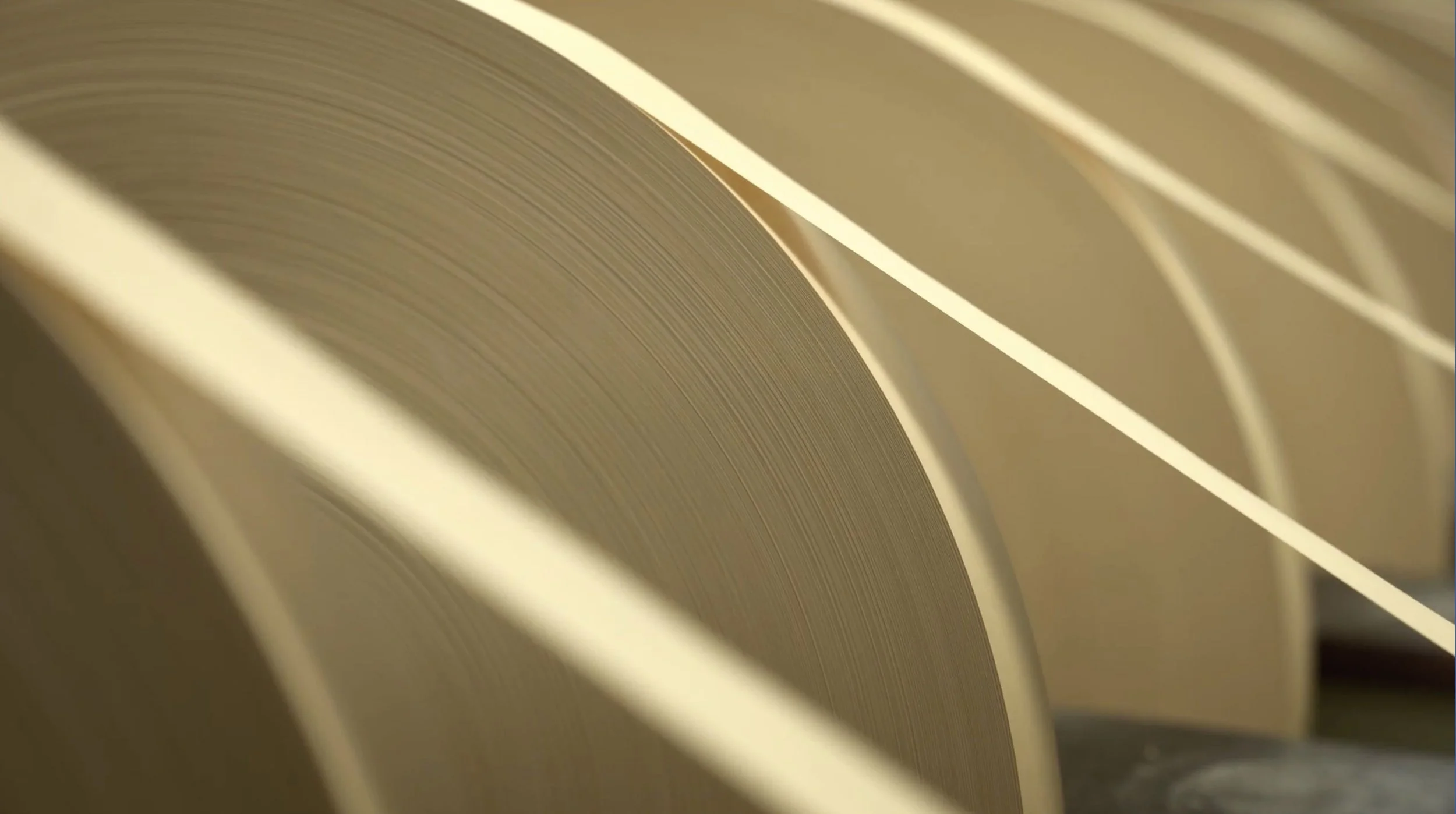
Manufacturing of products at Woodnotes has been designed to be as wasteless as possible. Our goal is to minimize the amount of landfill waste in all our operations. In our design work we think of the best solutions for the most efficient use of raw materials.
Paper yarn and In/Out rugs are always woven according to customer specifications and orders. There are several weaving widths in use and the weaving width is optimized according to the ordered carpet.
In our paper yarn carpet weaving, loss is caused by cutting waste at the edges of the carpets. Cutting waste is currently used to produce environmentally friendly thermal energy, but in the coming years we hope to find a way to recycle pulp-based material. Defective batches of paper yarn dyeing can be utilized in production.
The continuous-themed patterns in the In/Out rug collection (with the exception of the Beach model) are designed so that multiple rugs can be woven in parallel. Waste material is utilized for sample pieces. The waste generated by the polyester felt used in the backing of carpets is diverted to re-use, eg. for oil absorption at the local car repair shops.
Made to
measure
Production & waste
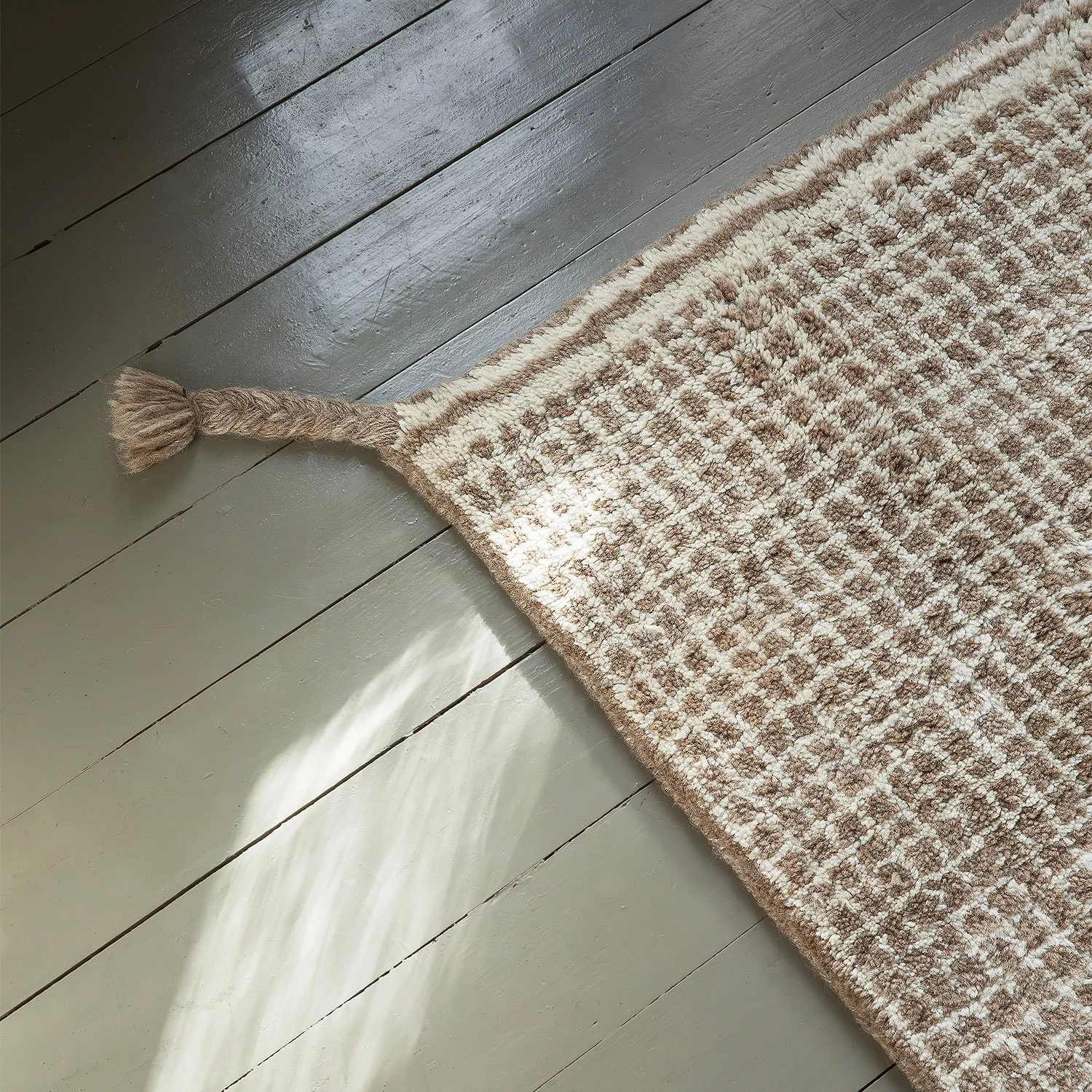
Hand-woven cotton paper carpets, tufted wool linen and hand-knotted wool rugs do not cause any waste as the rugs are made to order as piece goods.
No waste is generated from the blinds made from paper yarn cotton fabrics. Blinds of different widths can be cut from the fabric in side by side, and any leftover material can be used for sample pieces or made into table textiles.
Table textiles are woven parallel to their width, and thus no waste is generated during the manufacturing process.
The main use of Sand paper yarn cotton upholstery fabric is the upholstery of our k chairs and k ottomans. The weaving width of the sand fabric has been optimized according to the narrow k chair, so that the upholstery of two chairs is made side by side from the fabric. Likewise, the patterns of the My, Mini My and Roo lounge chairs do not cause any problematic extra material.
The leftover material from sewing a wide k chair and ottoman is utilized in Rest cushions. Also, all padding materials and lining fabrics used for k chairs are used 100%, leaving no extra leftovers behind.
The main use of Saimaa in/out upholstery fabrics is the production of lounge chairs suitable for outdoor use, and no wastage is caused due to the pattern of the fabrics.
The hand-knitted pieces in the studio collection do not leave any waste.
Paperless
office
Office & transportation
At our Helsinki office, we have invested in developing digital work processes accessible to all employees with the appropriate tools, aiming for a paperless office. Continuous reform of working methods will play a key role in achieving this goal. The covid19 pandemic and remote work positively boosted our work community towards paperless office practices.
We work with global transportation companies that compensate their emissions and are constantly committed to finding new, greener ways to operate. We also own a forest park that fully offsets our calculated CO2 emissions.